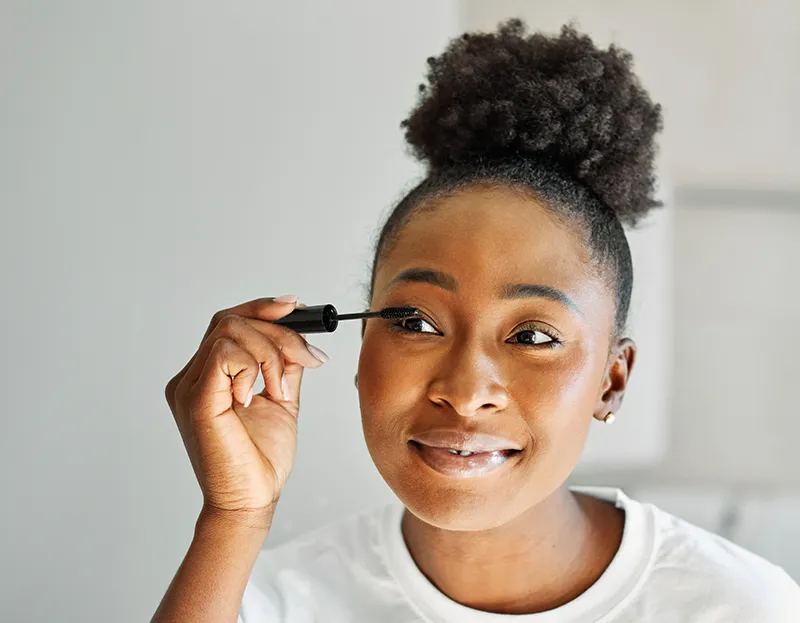
If your eyes feel gritty, irritated, or watery by midday, your makeup routine might be part of the problem. Many people dealing with dry eye symptoms don’t realize that their favorite products and daily habits could be making things worse.
Getting the right dry eye treatment starts with understanding what’s triggering your discomfort. Here’s what to watch out for and how to protect your eye health without giving up your beauty routine.
How makeup affects your tear film
Your eyes rely on a delicate, three-layer tear film to stay comfortable and clear. Certain makeup products (especially those applied near the lash line) can block the meibomian glands along your eyelids. These glands produce the oily layer of your tears that prevents evaporation. When they get clogged, your tears dry out too quickly, and symptoms like burning, redness, and blurry vision follow.
Products that can make dry eye worse
Not all makeup is created equal when it comes to eye health. These are some of the biggest offenders:
- Waterproof mascara — Harder to remove, it often requires heavy rubbing that disrupts the tear film and irritates the delicate eyelid skin
- Eyeliner applied to the waterline — Placing liner on the inner rim of your lids directly blocks meibomian gland openings
- Glittery or shimmer eyeshadows — Loose particles can migrate into the eye and cause irritation or inflammation
- Expired products — Old mascara and eyeliner harbor bacteria that can lead to lid inflammation (blepharitis), a major contributor to dry eye
- Lash primers and setting sprays — Some formulas contain preservatives or alcohols that dry out the ocular surface
Habits that sneak up on you
It’s not just the products themselves. The way you use them matters too.
- Applying liner inside the lash line rather than outside
- Skipping makeup removal before bed (even once can trigger inflammation)
- Rubbing your eyes to blend or remove shadow
- Using dirty brushes or applicators that transfer bacteria to your lids
- Wearing contact lenses while applying or removing makeup, which can introduce debris and irritants directly to the lens surface
If you wear contact lenses, it’s especially important to put them in before applying makeup and take them out before removing it. This single habit shift can significantly reduce irritation.
Cleaner alternatives for better eye health
Switching to eye-friendly products doesn’t mean sacrificing your look:
- Choose tube-based mascaras instead of waterproof formulas — they come off easily with warm water
- Opt for a pencil or liquid liner applied only to the outer lash line
- Look for products labeled ophthalmologist-tested or preservative-free
- Use a gentle, daily lid cleanser (like hypochlorous acid spray) to keep lids clean and gland openings clear
- Replace eye makeup every three months to minimize bacterial buildup
When a makeup swap isn’t enough
Sometimes adjusting your products helps, but persistent dryness, burning, or fluctuating vision during the day signals something deeper is going on. A comprehensive eye exam gives your eye doctor the full picture, including a close look at gland function, tear quality, and overall ocular surface health. Many people are surprised to learn their dry eye has a specific, treatable cause.
Dry eye is manageable, and you deserve to feel comfortable in your own eyes every single day. Schedule an appointment with Omaha Primary EyeCare today to find out what’s driving your symptoms and explore treatment options tailored to you.