LipiFlow® and OptiLight IPL therapy can both help treat dry eye related to meibomian gland dysfunction (MGD). But they are not interchangeable. One primarily targets blocked oil glands, while the other is designed to help reduce inflammation that can interfere with healthy tear production.
The right recommendation depends less on how uncomfortable your eyes feel on a given day and more on why your tear film is unstable. A dry eye evaluation helps your doctor identify the factors behind your symptoms and decide whether LipiFlow, OptiLight, or a combined approach makes the most sense.
When blocked meibomian glands are the main concern
Meibomian glands line the eyelids and produce the oil layer of your tears. When these glands become clogged, the oils may become thick or stop reaching the eye’s surface. Without enough oil, tears evaporate too quickly.
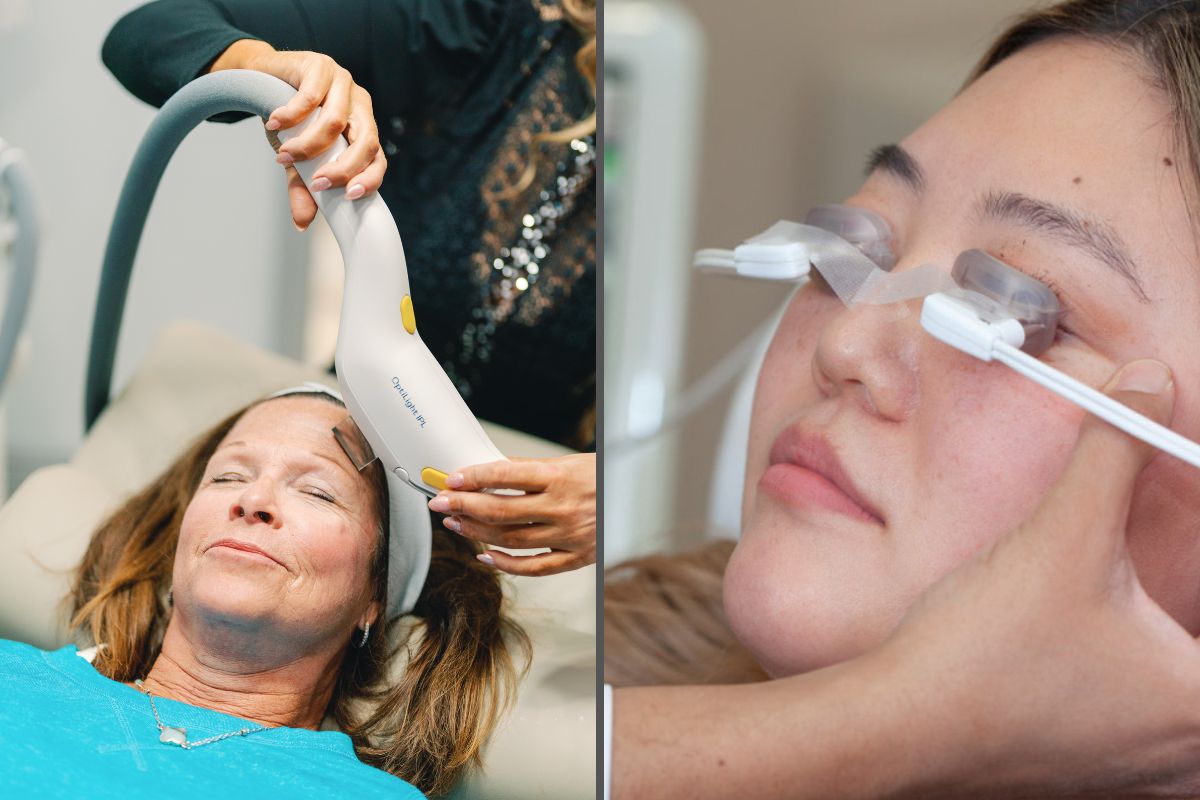
When gland blockage is the primary finding, LipiFlow may be recommended. The treatment uses controlled heat and gentle pressure to warm and express the glands, helping release backed-up oils. It is often a practical option for patients whose evaluation shows obstructed glands but does not point to significant eyelid inflammation as the main driver.
LipiFlow is a single in-office treatment that takes about 20 minutes. Because gland function can take time to recover, symptom improvement may develop gradually over the following weeks.
When eyelid inflammation is playing a larger role
For some patients, MGD is part of a broader cycle involving inflammation around the eyelids. This may be more likely when the eyelids show signs of irritation or when factors such as rosacea-related skin changes are contributing to dry eye.
OptiLight may be recommended in these cases. It uses intense pulsed light on the skin beneath the eyes to help address inflammation associated with MGD. Following treatment, the glands may also be expressed to improve oil flow.
Unlike LipiFlow’s single-session format, OptiLight is typically completed as a series of four treatments, spaced two to four weeks apart. This schedule allows the doctor to address the inflammatory component over time.
When both factors are present
Dry eye rarely has one simple cause. A patient may have blocked glands and inflammation affecting the eyelids and tear film. In that situation, choosing between LipiFlow and OptiLight may not be an either-or decision.
Your doctor may recommend a staged treatment plan that uses OptiLight to address inflammation and LipiFlow to clear gland blockages, along with home care or other dry eye therapies when appropriate. The sequence and timing depend on the findings from your exam, your symptoms, and how your eyes respond to treatment.
Start with the cause, not the treatment
Eye drops can temporarily add moisture, but they do not reveal why dry eye keeps returning. We can assess your tear quality, evaporation rate, eyelid health, and meibomian gland function.
Schedule an appointment in Elkhorn to find the treatment plan that addresses what is actually driving your dry eye.